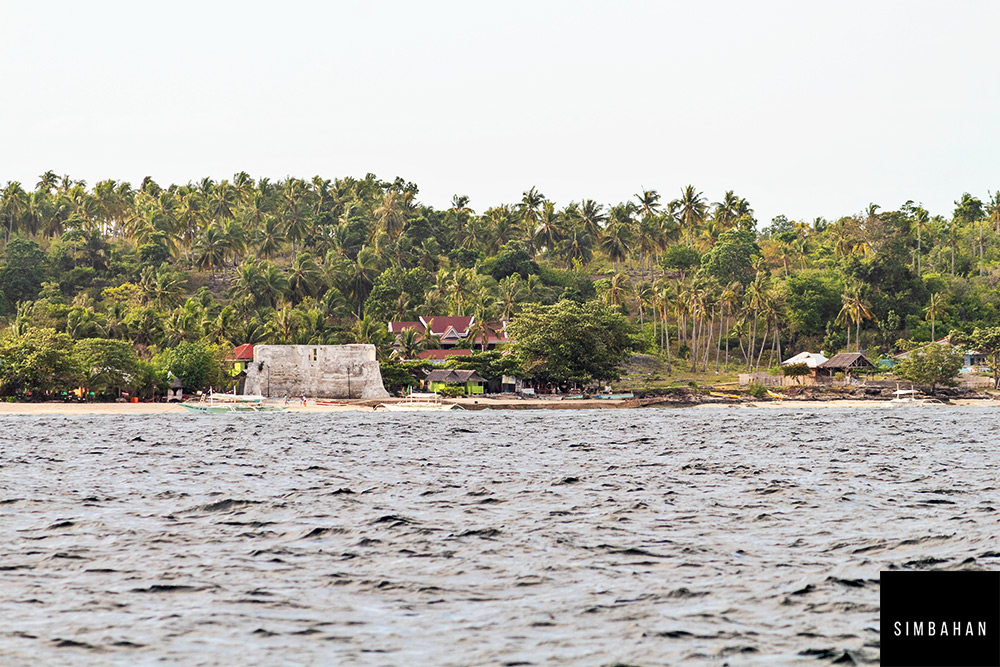
Pamilacan Fort is a small triangular watchtower on the northeastern shore of Pamilacan Island, Baclayon, Bohol. Built during the Spanish colonial period, it formed part of the coastal defense network and fortifications established around the country.
The fort stands on an island in the Bohol Sea, where its position gave sentries a strategic view of the surrounding waters. Its location was particularly important during a period when coastal settlements faced attacks from maritime raiders.
Unlike the massive stone fortresses found in major colonial centers, Pamilacan Fort represents a smaller and more localized form of Spanish military architecture. Its purpose was primarily surveillance and early warning rather than large-scale defense.
The Location of Pamilacan Fort
Pamilacan Island is one of the barangays of Baclayon, located off the southeastern coast of Bohol. The island lies within the Bohol Sea, separated from the mainland by open water.
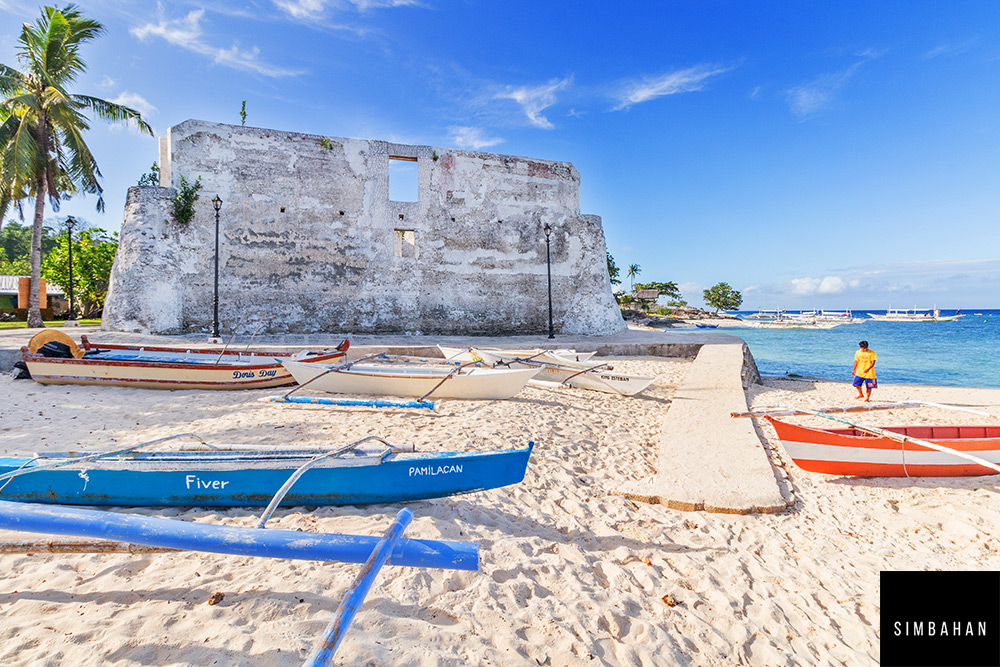
The Pamilacan Fort occupies the northeastern part of the island. Its position allowed it to function as a lookout over the surrounding sea. Historical accounts describe the structure as a watch station for detecting approaching intruders, particularly those coming from the north.
The location was part of a broader defensive system around Bohol. Other surviving structures associated with this network include the watchtowers at Dauis, Panglao, Loay, Maribojoc, and Balilihan.
These structures demonstrate how Spanish colonial authorities and local communities used strategically placed towers to monitor vulnerable coastal areas.
Architecture of Pamilacan Fort
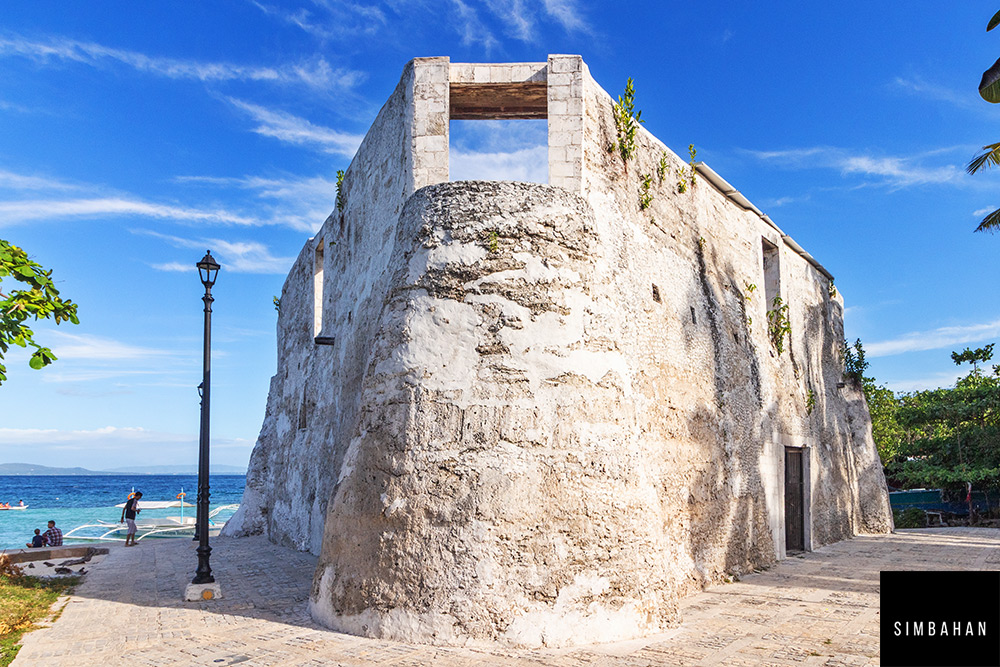
The most distinctive feature of Pamilacan Fort is its triangular plan.
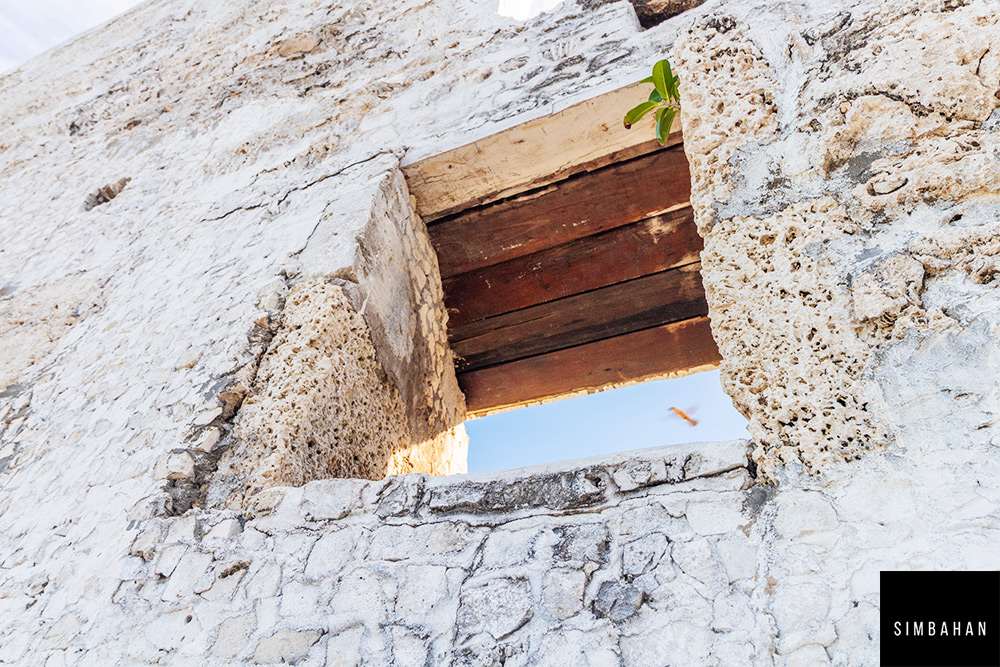
The structure was built using rubble masonry, with cut coral blocks framing its portal and windows. Rounded buttresses reinforce each of its three corners. These architectural elements give the structure a compact and distinctly defensive character.
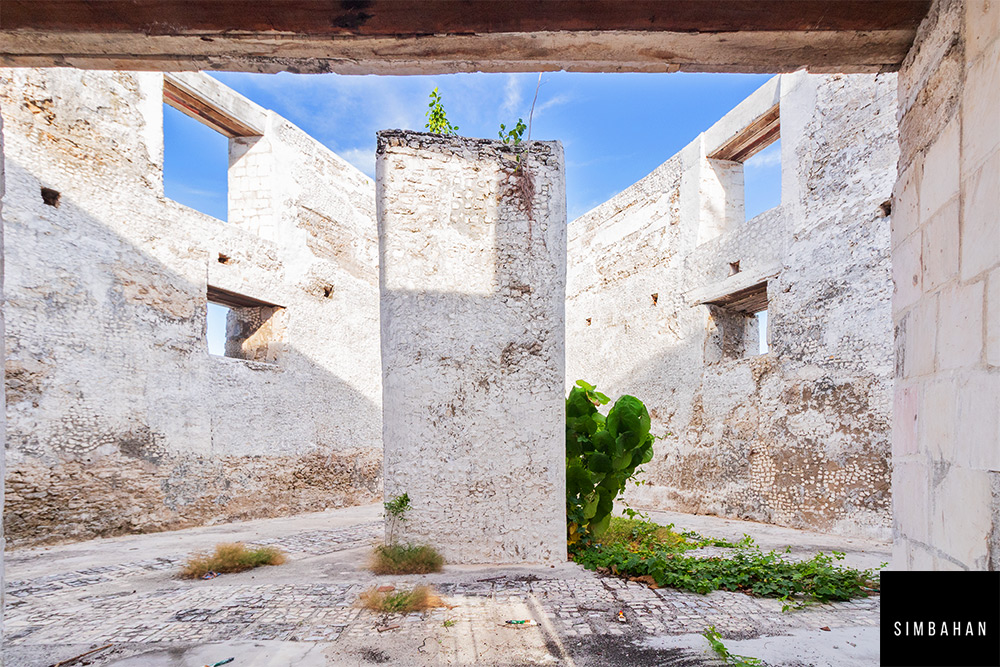
The fort’s surviving masonry also contains clues about a former upper level.
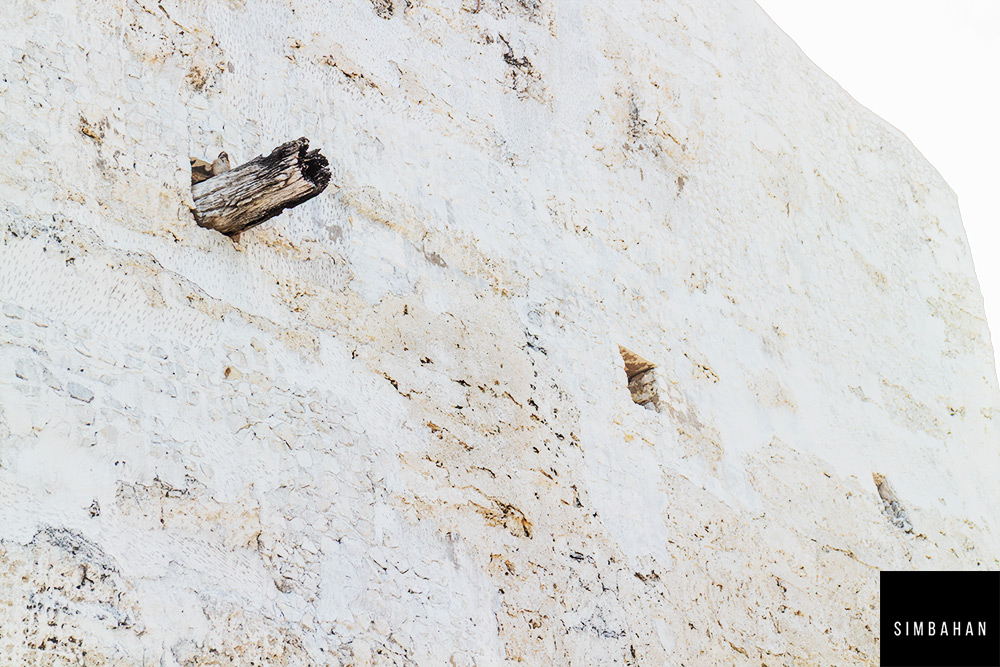
Embedded wooden trusses and a triangular pillar at the center suggest that the structure may have carried a second floor. This upper level was probably constructed primarily of wood and has since disappeared.
The surviving structure therefore represents only part of its original form.
Its present appearance is largely defined by the masonry base, while the missing wooden elements make it difficult to reconstruct the fort’s complete original profile with certainty.
The use of coral stone is consistent with the construction practices found in other Spanish colonial structures. Coral masonry was widely used for churches, convents, watchtowers, and other substantial buildings not only in Bohol but in surrounding island provinces as well.
The Fort as Part of Bohol’s Coastal Defense
The Spanish colonial government developed coastal watchtowers throughout the country in response to repeated maritime raids.
In Bohol, these structures formed a network of observation points along vulnerable sections of the coastline. Their primary function was to detect approaching vessels and provide warnings to nearby settlements.
The Pamilacan structure was particularly significant within this system because of its position offshore. Bohol’s provincial heritage inventory describes it as the most important watchtower in the island’s Spanish-period defense system.
The fort should therefore be understood together with the other Bohol watchtowers rather than as an isolated structure.
The surviving towers vary considerably in size, form, and architectural detail. Yet they share a common defensive purpose and reflect the maritime conditions that shaped settlement and construction in colonial Bohol.
When Was Pamilacan Fort Built?
The exact construction date of Pamilacan Fort has not been established.
The Municipality of Baclayon describes it as approximately 200 years old and notes indications that it was constructed during the 19th century. A large wooden cross once located near the fort bears a date from the 1800s, although this does not establish the construction date of the fort itself.
This uncertainty is important when discussing the structure.
Rather than assigning a specific year without documentary evidence, the fort is best described as a Spanish colonial-period structure, probably dating to the 19th century based on the available local documentation.
Its relationship with the other Bohol watchtowers also places it within the province’s broader system of coastal defense.
Present Condition
Pamilacan Fort survives as a fragment of its original structure.
Earlier documentation described the watchtower as being in a deteriorated condition and in need of conservation. More recent heritage documentation recognizes the surviving masonry as an important part of Bohol’s historic defensive landscape.
Much of the original upper structure is no longer present. The surviving triangular masonry base, however, retains enough architectural evidence to identify its original function and construction.
Its condition also illustrates the vulnerability of coastal heritage structures.
Exposure to salt air, wind, rain, and the changing shoreline environment can accelerate the deterioration of historic masonry. These factors make the continued documentation and conservation of the structure particularly important.
A National Cultural Treasure
The Pamilacan Fort forms part of the Bohol Watchtowers Collective, which the National Museum of the Philippines declared a National Cultural Treasure under Declaration No. 11-2011 on August 29, 2011. The collective includes six Spanish colonial watchtowers in Bohol.
The other structures are located in Maribojoc, Dauis, Panglao, Loay, and Balilihan.
The National Museum defines a National Cultural Treasure as a cultural property possessing outstanding historical, cultural, artistic, or scientific value that is significant to the country. These properties are subject to state protection and preservation under Philippine cultural heritage laws.
The declaration therefore recognizes more than the physical remains of the Pamilacan structure.
It recognizes the fort as evidence of a broader chapter in Philippine history, when coastal communities and colonial authorities developed defensive systems in response to maritime threats.
In May 2024, the National Museum of the Philippines formally turned over a National Cultural Treasure marker for the Pamilacan Watchtower. The ceremony marked the formal installation of the marker on Pamilacan Island.
A Small Fort with a Larger Historical Context
Pamilacan Fort may be modest in scale, but its historical importance extends beyond its walls.
Its triangular form, coral masonry, coastal location, and surviving structural details provide evidence of how Spanish colonial communities defended Bohol’s vulnerable shores.
The fort also belongs to a larger group of watchtowers that shaped the province’s historic landscape. Together, these structures show how military architecture responded to geography, maritime threats, available materials, and the needs of local communities.
Today, only part of Pamilacan Fort remains.
That fragment is enough to tell an important story. It connects Pamilacan Island to Bohol’s Spanish colonial past and to a wider network of coastal fortifications that once watched the surrounding seas.
For that reason, its preservation matters not simply because it is old, but because it remains tangible evidence of how a coastal society organized itself around the realities of its time.
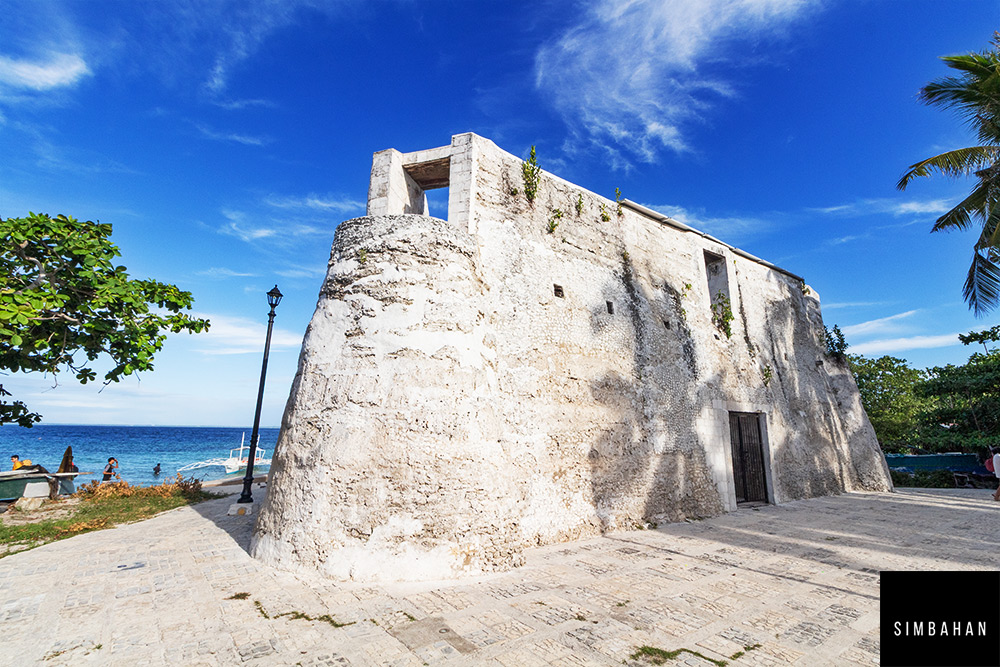
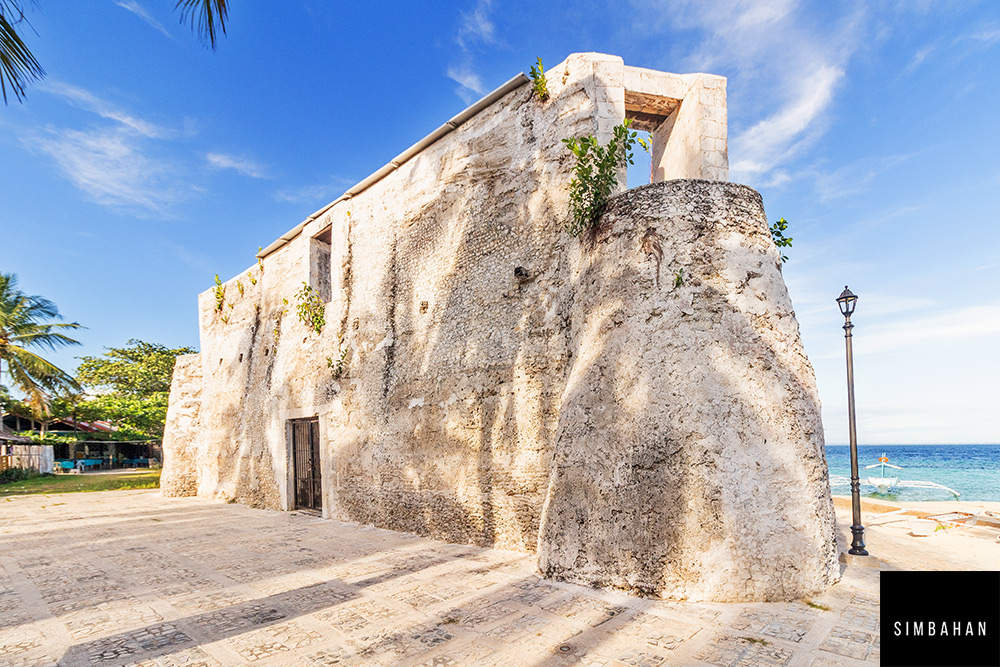
Small openings on the fort